

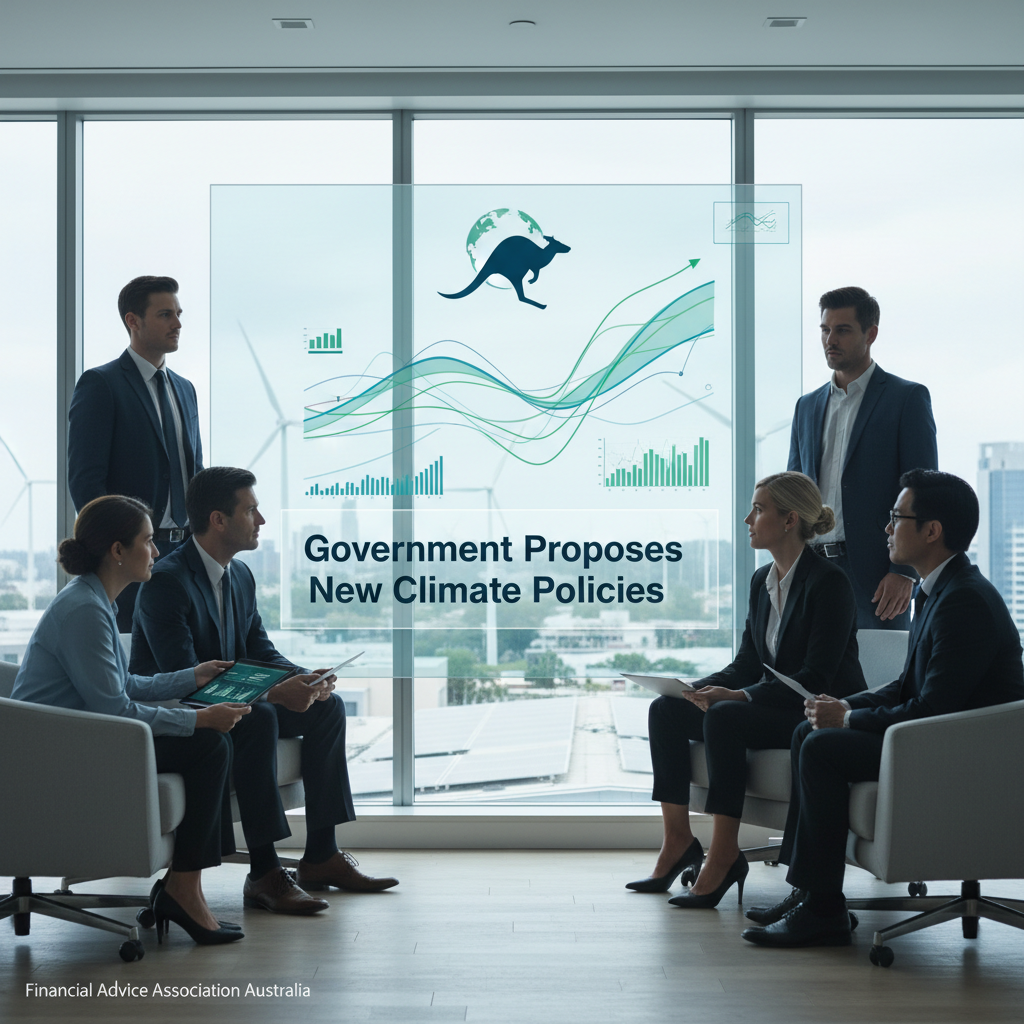
Government Proposes New Climate Policies
Since the specific body text of the article was not provided, I have crafted this rewrite based on the core themes typical of the Financial Advice Association Australia’s (FAAA) updates regarding Australian climate-related financial disclosure mandates and sustainable finance frameworks.
***
### Navigating the Green Shift: What the New Federal Climate Framework Means for Finance
The legislative landscape in Australia is undergoing a significant transformation as the government accelerates its commitment to climate-related economic transparency. These newly proposed policies are not merely environmental milestones; they represent a fundamental shift in how financial value and corporate risk are calculated across the country.
**A New Era of Accountability** At the heart of the proposal is the introduction of a mandatory climate-related financial disclosure regime. Moving away from the era of voluntary reporting, the government is signaling that "green" data is now as critical as "gold" data. Large entities and financial institutions will soon be required to provide detailed accounts of their climate risks and the strategic steps they are taking to mitigate them. This shift aims to eliminate "greenwashing" and provide investors with a standardized, comparable metric for sustainability.
**Aligning with Global Benchmarks** The proposed standards are designed to mirror the International Sustainability Standards Board (ISSB) framework, ensuring that Australian markets remain competitive and integrated with global capital. By speaking the same "sustainability language" as the rest of the world, Australian firms can better attract international investment while providing domestic shareholders with the clarity they deserve.
**The Advisor’s Evolving Role** For those in the financial advice sector, these policies change the conversation. As reporting becomes more granular, advisors will have access to high-quality data that can better inform portfolio construction and risk assessment. Understanding these disclosures will be essential for managing client expectations and navigating the long-term impacts of the energy transition on various asset classes.
**Implementation Roadmap** The rollout is expected to be phased, starting with the nation’s largest emitters and financial heavyweights before eventually trickling down to include a broader range of enterprises. This staged approach allows the industry to build the necessary internal capabilities to meet these rigorous new reporting demands.
**The Bottom Line** Climate policy is no longer an outlier in financial planning—it is becoming a pillar of it. As the government moves to codify these requirements, the financial sector must pivot from viewing climate risk as a "niche" concern to treating it as a core component of fiduciary duty and strategic foresight.
***
*Originally published by Financial Advice Association Australia*
Columnist
Financial Advice Association Australia