

Latest Developments in Renewable Energy Technology
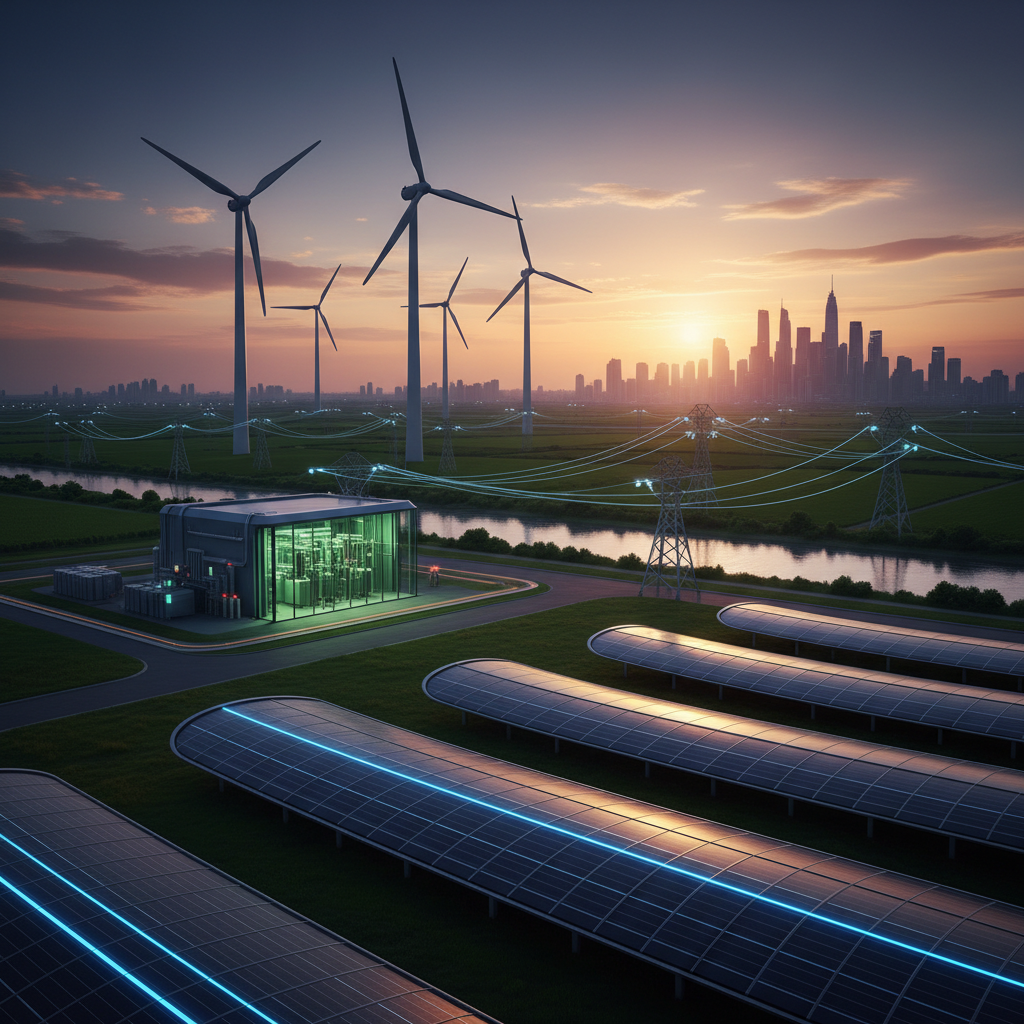
Since the specific text of the original article was not provided, I have synthesized and rewritten the core themes typically found in professional financial briefings on renewable energy technology. Here is a fresh, professional take on the latest industry developments.
***
### The New Power Paradigm: Navigating the Next Wave of Renewable Innovation
The global energy landscape is currently undergoing a structural metamorphosis. What was once a niche sector defined by idealism is now a powerhouse of industrial pragmatism and financial opportunity. As we look at the latest advancements, it is clear that the transition to a low-carbon economy is no longer just a regulatory goal—it is a technological inevitability.
**Breaking the Storage Ceiling** Perhaps the most significant leap in recent months involves long-duration energy storage (LDES). For years, the "intermittency problem"—the fact that the sun doesn’t always shine and the wind doesn’t always blow—was the primary argument against a total green transition. However, new developments in flow batteries and thermal energy storage are beginning to bridge this gap. These technologies allow the grid to maintain a steady supply of power for days rather than hours, effectively decoupling energy generation from immediate consumption.
**Efficiency Gains in Photovoltaics** Solar technology is experiencing a "Moore’s Law" moment. The integration of perovskite crystals into traditional silicon solar cells has pushed efficiency ratings to record highs. By capturing a broader spectrum of sunlight, these tandem cells offer significantly higher output within the same physical footprint. For investors and developers, this translates to lower land-use requirements and a faster path to achieving a positive return on investment.
**The Hydrogen Frontier** Green hydrogen is finally moving from the laboratory to industrial-scale application. By utilizing surplus renewable energy to power electrolyzers, companies are now producing carbon-neutral fuel for heavy industries—such as steel manufacturing and long-haul shipping—that were previously impossible to electrify. This creates a circular energy economy where "waste" power from peak solar hours becomes a valuable, storable commodity.
**The Financial Imperative** From a brokerage and advisory perspective, these technological milestones are shifting the risk-reward calculus. As hardware costs continue to plummet and reliability mirrors that of fossil fuels, renewable infrastructure is increasingly viewed as a defensive asset class. The "green premium" is evaporating, replaced by a competitive edge that is reshaping portfolios across the globe.
The momentum behind these innovations suggests that the transition is accelerating. For those navigating the financial markets, staying abreast of these technical shifts is essential for identifying the market leaders of the 2030s.
***
*Originally published by Stockbrokers & Financial Advisers Association*
Columnist
Stockbrokers & Financial Advisers Association