

New study reveals climate change accelerating ice melt in Antarctica
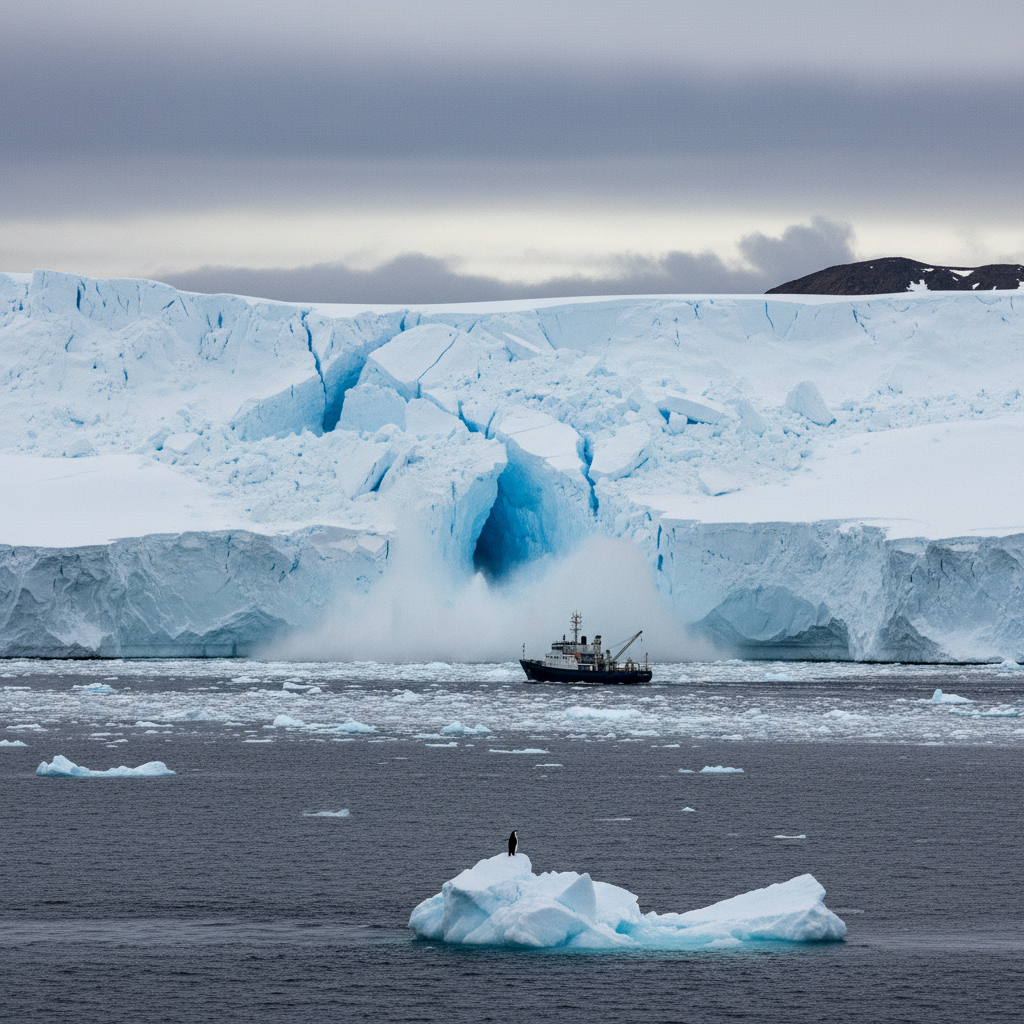
**Headline: The Deep Chill is Thawing: Antarctica’s Escalating Ice Loss and the Global Implications**
The southern frontier is shifting at a pace that demands our attention. Recent research has brought a sobering reality to the forefront: the Antarctic ice sheet is losing its frozen reserves at a significantly accelerated rate. While the continent was once considered a resilient bastion against rising temperatures, new data indicates that the impacts of climate change are penetrating deeper and more rapidly than previous models suggested.
**A Momentum in Meltdown** The study highlights a troubling trend in the velocity of ice shelf deterioration. What was once a gradual process has evolved into a swift retreat, driven primarily by the warming of surrounding ocean currents. As these warmer waters erode the underbelly of the ice shelves, the structural integrity of the continent's glacial systems is being compromised. This is not merely a regional concern; the sheer volume of water currently locked in Antarctic ice represents the single greatest potential contributor to global sea-level rise.
**Precision in the Data** Researchers utilized advanced satellite imagery and seismic monitoring to track these changes, noting that the rate of mass loss has seen a marked uptick over the last decade. The data points to specific vulnerabilities in the West Antarctic Ice Sheet, where the interaction between atmospheric warming and oceanic heat has created a "feedback loop" that challenges previous stability estimates.
**The Ripple Effect for Global Interests** From a broader perspective, these environmental shifts serve as a critical indicator for long-term risk assessment. The acceleration of polar melt acts as a catalyst for volatile weather patterns and coastal shifts that could redefine global infrastructure requirements and economic stability. For professionals who monitor long-term trends, the message is clear: the environmental baseline is moving, and the "frozen continent" is no longer the static entity it was once believed to be.
This latest evidence serves as a call for a more nuanced understanding of climate velocity. As the ice thins, the urgency for informed, data-driven responses grows—ensuring that we are not just observers of this change, but proactive in navigating its consequences.
***
*Originally published by Stockbrokers & Financial Advisers Association*
Columnist
Stockbrokers & Financial Advisers Association