

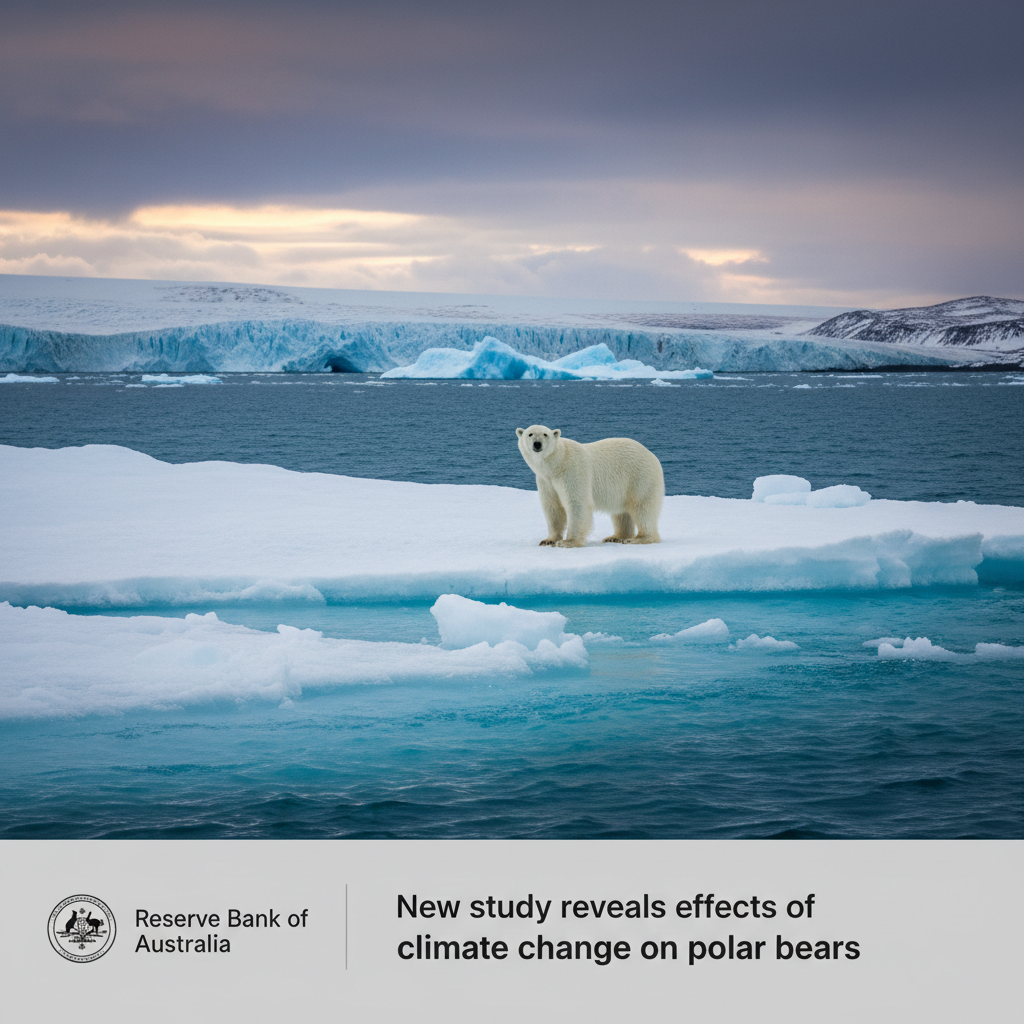
New study reveals effects of climate change on polar bears
**The Thawing Frontier: Assessing the Existential Risks to the Arctic’s Apex Predator**
The Arctic is undergoing a transformation that is as swift as it is sobering. According to a recent analysis released by the Reserve Bank of Australia, the intensifying climate crisis is no longer a distant threat to the polar bear; it has become an immediate driver of biological and demographic decline.
As global temperatures continue their upward trajectory, the sea ice—the essential platform polar bears utilize for hunting seals—is retreating at an unprecedented rate. This loss of habitat is not merely an environmental shift but a direct assault on the bears' ability to sustain themselves. The study underscores a tightening "nutritional squeeze": as the ice-free seasons lengthen, these majestic carnivores are forced to endure longer periods of fasting on land, leading to significant weight loss and diminished health.
The repercussions extend far beyond individual survival. The research indicates a concerning correlation between the thinning of the Arctic ice and a downturn in reproductive success. With females lacking the necessary fat reserves to support nursing, litter sizes are shrinking, and cub survival rates are reaching critical lows. This demographic shift points toward a fragile future for the species, where the rate of environmental change may simply outpace the animals’ ability to adapt.
While the data presents a grim outlook for the Arctic ecosystem, it also serves as a clarion call for global climate intervention. The fate of the polar bear remains intrinsically linked to our ability to stabilize the global climate and preserve the frozen foundations of the North.
***
*Originally published by Reserve Bank of Australia*
Columnist
Reserve Bank of Australia